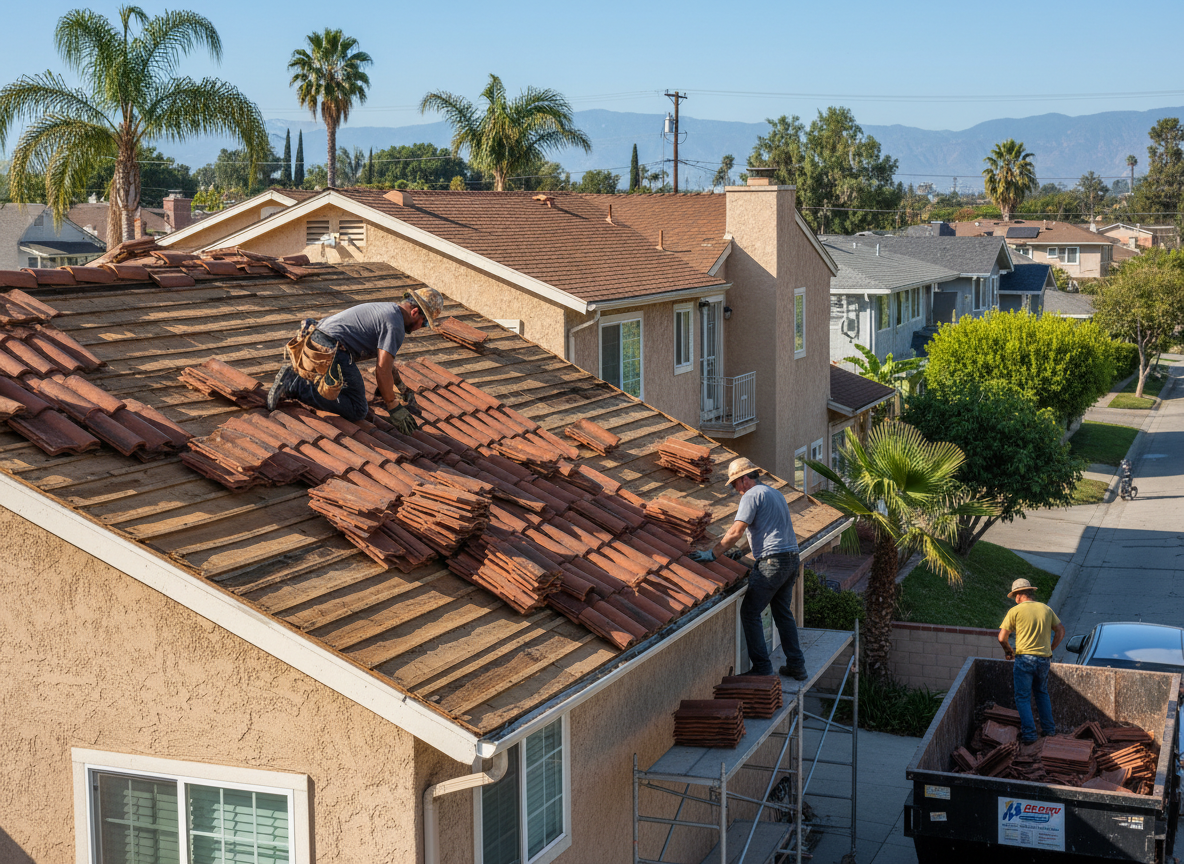
South Gate homes built from the 1950s through 1970s commonly feature clay or concrete tile roofs that now require full replacement due to age and exposure. These roofs sit on older rafters that often need inspection for dry rot before new underlayment goes down. Winter rains in the mild Mediterranean climate can penetrate cracked tiles and failed felt, leading to ceiling stains near South Gate Park neighborhoods. Los Angeles County seismic rules also require proper fastening during replacement to handle regional ground movement.
Replacement starts with complete removal of existing tiles to check decking condition, especially on homes near South Gate City Hall where decades of sun have dried out the original materials. New 30-pound felt or synthetic underlayment is installed followed by concrete tiles chosen for better impact resistance than older clay versions. Edge flashing and ridge vents must be updated to current standards so wind-driven rain from Pacific storms does not enter. Crews working from the Tweedy Blvd base can respond quickly when leaks appear after heavy seasonal downpours.
Homeowners in Lynwood and Downey often discover that partial tile repairs only delay the inevitable because matching discontinued profiles proves difficult. Full replacement allows proper ventilation upgrades that reduce attic heat buildup during long dry summers. Concrete tiles add weight, so structural checks are performed on every job to confirm rafters can support the load without sagging. This approach prevents future callbacks that occur when shortcuts are taken on aging South Gate roofs.
Technician insight
In South Gate, the thing that catches most people out with Tile Roof Replacement is the brittle underlayment on 1960s homes near South Gate Park. Once winter rains start, water gets under cracked tiles and the old felt lets it through to the deck fast. Skipping a full deck check before new tiles go on always leads to callbacks within a couple seasons.
Tile Roof Replacement Near South Gate Park
A homeowner noticed ceiling stains after several winter storms. Inspection revealed cracked clay tiles and saturated felt on a 1960s roof. The crew removed the old materials, repaired minor deck spots, installed new synthetic underlayment and concrete tiles with updated flashing. The home stayed dry through the next rainy season.
How it works
- 1
Initial Roof Assessment
Technicians examine tile condition, underlayment, flashing and decking on site in South Gate to identify all damage points.
- 2
Tile and Underlayment Removal
Existing tiles are taken off carefully and disposed, exposing the deck for inspection of rot or structural issues common in older local homes.
- 3
Deck Preparation and New Underlayment
Repairs are made to the deck then synthetic or felt underlayment is applied with sealed seams to handle winter rains.
- 4
Tile Installation and Finishing
New concrete tiles are fastened per Los Angeles County requirements, with updated ridge and edge details for wind and water resistance.
Pricing
Cost depends on roof size, tile selection and any deck repairs needed; upfront quotes provided after inspection.