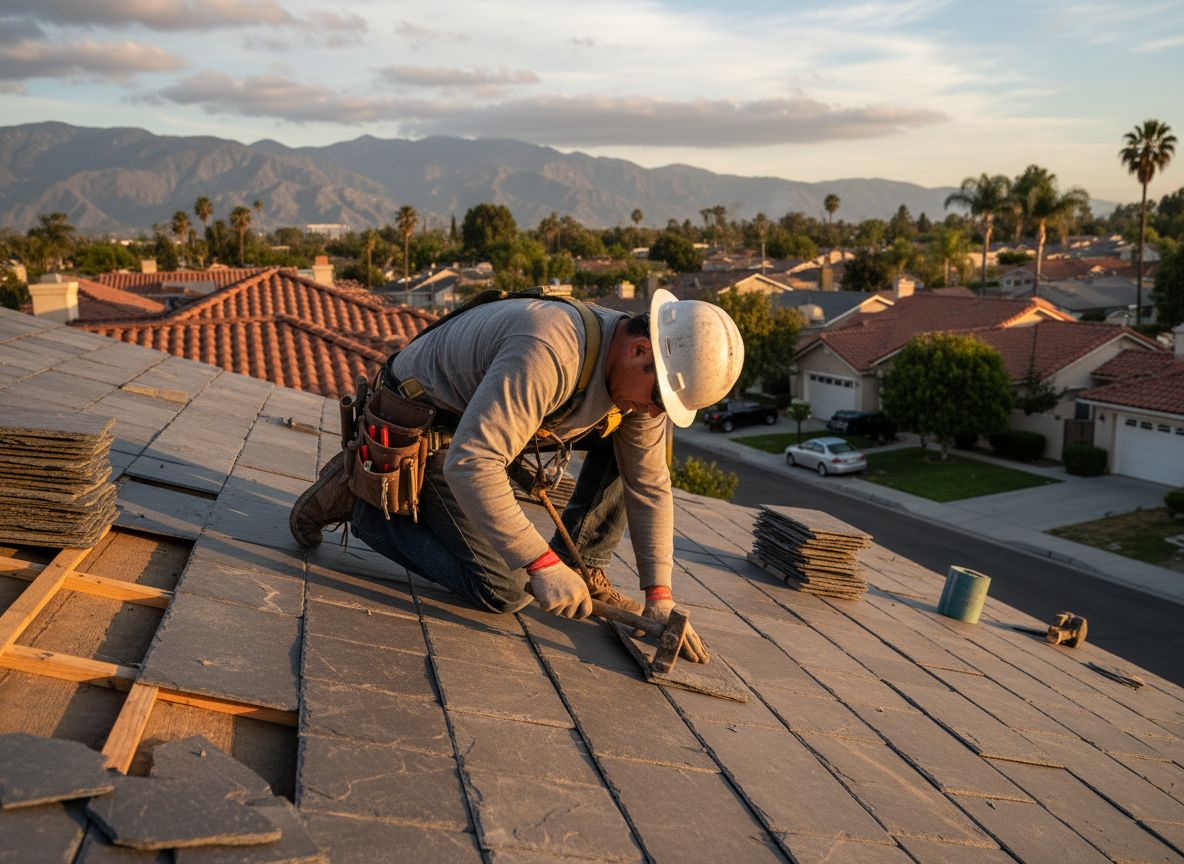
Slate roofs perform well in South Gate's mild Mediterranean climate where freeze-thaw cycles are rare, yet winter rains can still drive water under loose tiles if underlayment has aged. Homes near South Gate Park and along older blocks often feature slate on mid-century construction, so installers must verify rafter spacing and sheathing strength before adding the heavy material. Proper ventilation is essential because even moderate humidity can trap moisture beneath the tiles when attic airflow is blocked.
Working with slate requires matching the original thickness and color when making repairs on homes in South Gate, Lynwood, or Downey to maintain appearance and function. Flashing around chimneys and valleys needs extra attention because occasional Pacific storms deliver concentrated rainfall that can overwhelm poorly sealed joints. Crews at Quilvex Crest carry replacement slates on site so small sections can be fixed without ordering delays.
Code compliance in Los Angeles County means confirming that any new slate work meets current wind and seismic fastening standards, especially on two-story homes where uplift can occur during Santa Ana conditions. Homeowners sometimes overlook the need to inspect the roof deck when only a few tiles are missing, which can allow rot to spread undetected under the remaining slate.
Maintenance Considerations
Regular checks after heavy rains help catch slipped tiles before water reaches the underlayment, particularly on homes with mature trees near South Gate City Hall that drop debris onto the roof surface.
Technician insight
In South Gate, the thing that catches most people out with Slate Roofing is the weight on 1950s-era homes around South Gate Park; rafters often need sistering because the original framing was never sized for slate, and the mild rains still find every gap once underlayment fails.
Slate Section Repair Near Tweedy Blvd
Homeowner reported water stains after winter rain. Inspection showed cracked underlayment beneath displaced tiles on a 1960s home. Crew replaced the affected slate and underlayment section while reinforcing adjacent flashing. The roof stayed dry through the next season without requiring full replacement.
How it works
- 1
Site Assessment
Inspect the existing slate, underlayment, and structural support from the attic and exterior on South Gate properties.
- 2
Material Matching
Select replacement slate that aligns with the original thickness, color, and texture found on local homes.
- 3
Repair or Installation
Secure new tiles with proper fasteners, replace damaged flashing, and ensure ventilation meets county requirements.
- 4
Final Walkthrough
Review all work with the homeowner and document condition for future reference.
Pricing
Pricing varies with roof size, slope access, and whether structural reinforcement is needed.