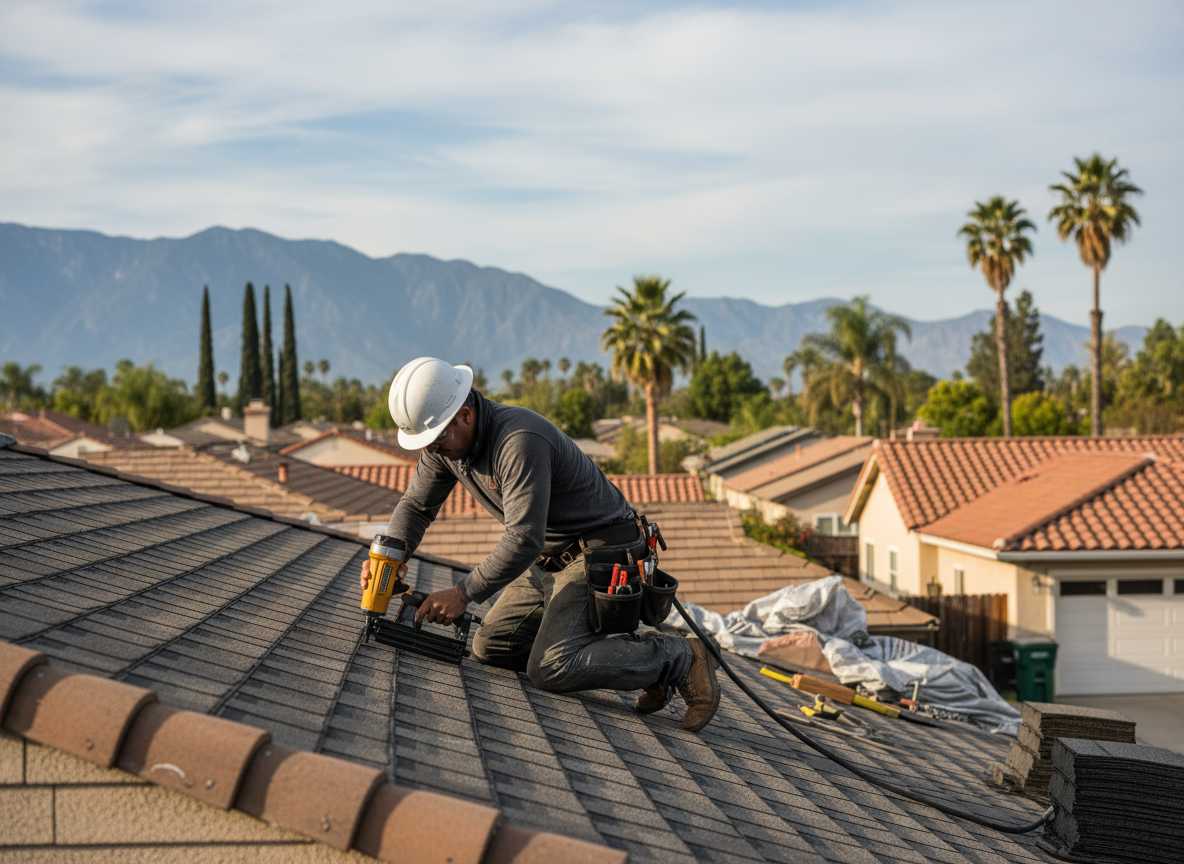
South Gate residential roofs face steady exposure from the mild Mediterranean climate, where winter rains can pool on older asphalt systems and summer heat accelerates granule loss. Many homes near South Gate Park and around South Gate City Hall were built in the 1950s and 1960s with single-layer shingles over skip sheathing, so full tear-offs often reveal deteriorated decking that requires plywood replacement before new underlayment goes down. Los Angeles County building codes now require Class A fire-rated materials in this area, which changes material choices for homeowners replacing roofs in Lynwood, Downey, or Huntington Park borders.
Edge cases appear frequently on flat or low-slope additions common in South Gate backyards. These sections need modified bitumen or TPO membranes rather than standard shingles, and improper flashing at the transition to the main roof is a leading cause of interior leaks during rare but intense rain events. Ventilation also matters here; many original ridge vents were never installed, trapping moisture that shortens shingle life and promotes mold on attic insulation.
When working on two-story homes common along Tweedy Boulevard, crews must account for narrow side yards that limit equipment access, often requiring hand-loading of materials instead of boom trucks. This adds time but prevents damage to neighboring fences and landscaping that sits close to property lines throughout the neighborhood.
Technician insight
In South Gate, the thing that catches most people out with Residential Roofing is the number of 1950s and 1960s homes around South Gate Park that still have the original skip sheathing. Once you start the tear-off you often find entire sections that need new plywood, and that work cannot be spotted from a ladder on the ground.
Two-Story Home Roof Replacement South of South Gate City Hall
Homeowner noticed water stains on second-floor ceilings after winter rain. Inspection showed failed flashing at a rear addition and two layers of old shingles trapping moisture. Crew performed complete tear-off, replaced damaged decking, installed new underlayment and Class A shingles, and added proper ridge ventilation. No further leaks reported after the next rain season.
How it works
- 1
On-Site Assessment
Inspect the existing roof, attic ventilation, and deck condition from the street side and interior access points.
- 2
Material and Code Review
Select Class A fire-rated shingles or membrane systems that meet Los Angeles County requirements for the specific home style.
- 3
Tear-Off and Deck Repair
Remove old layers, replace damaged plywood or skip sheathing, and install new synthetic underlayment.
- 4
Installation and Flashing
Apply new roofing, seal all penetrations, and tie in new flashing at walls, valleys, and chimneys.
- 5
Final Walk-Through
Check drainage, ventilation, and appearance with the homeowner before cleanup.
Pricing
Upfront quotes provided after inspection; final price depends on roof size, layers present, and any deck repairs required.