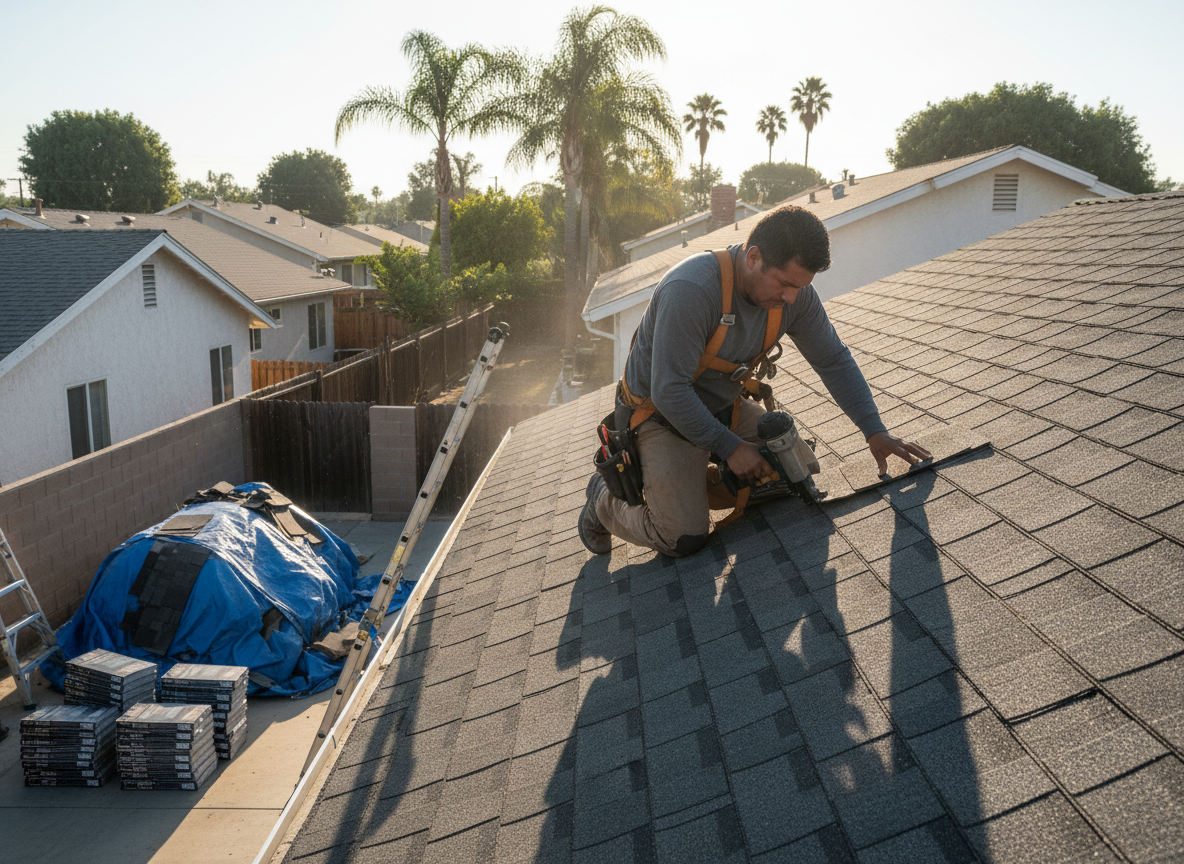
South Gate homes built in the 1940s through 1970s often carry asphalt shingle roofs that have reached the end of their service life due to repeated sun exposure and the occasional heavy winter rains typical of Los Angeles County. These roofs sit on standard rafter construction with minimal attic ventilation, which accelerates granule loss and underlayment breakdown along the south-facing slopes. Proper replacement requires removing multiple layers without damaging the original decking, a step that frequently reveals rotted sheathing around the eaves near South Gate Park.
When working in neighborhoods bordering Lynwood and Huntington Park, crews must account for the tight lot lines and shared driveways that limit staging space for material delivery. Shingles rated for 130 mph wind resistance perform best here because Santa Ana winds funnel through the area in fall. Flashing details at valleys and around the small chimneys common on these single-story ranches demand extra attention to prevent leaks during the short but intense rainy season.
Local building practices in Downey and South Gate also call for specific underlayment upgrades when the existing felt has been compromised by prior repairs. Matching the existing shingle profile avoids HOA issues around South Gate City Hall, while ensuring the new ridge vent improves airflow without altering the roofline. These details separate a standard overlay from a roof that will last through the next two decades of mild winters and hot summers.
Technician insight
In South Gate the thing that catches most people out with Asphalt Shingle Roofing is the hidden rot along the eaves on 1950s homes south of South Gate Park. The mild Mediterranean climate lets small leaks go unnoticed until the fascia softens, and once you start the tear-off you often find the original decking was never replaced during the last re-roof.
Eave Rot Discovered on Tweedy Blvd Home
Homeowner called after noticing granules in the gutters near South Gate City Hall. We found two layers of shingles with widespread deck rot along the north eaves caused by poor original flashing. We replaced the damaged plywood, installed new synthetic underlayment, and completed the shingle replacement before the next rain moved through Los Angeles County.
How it works
- 1
Initial Roof Assessment
Inspect the existing asphalt shingles, decking condition, and ventilation from the street and attic access points.
- 2
Material Selection and Tear-Off Planning
Choose shingles suited to local wind loads, schedule tear-off to minimize exposure during the mild rainy months.
- 3
Deck Repairs and Underlayment
Replace damaged sheathing, install upgraded synthetic underlayment, and seal all penetrations.
- 4
Shingle Installation and Flashing
Lay new shingles with proper nailing patterns, install new step flashing at walls and valleys, and add ridge ventilation.
- 5
Final Inspection and Cleanup
Walk the roof with the homeowner, verify drainage, and remove all debris from the property.
Pricing
Cost depends on roof size, number of layers, and any deck repairs required.